
UK aesthetics is booming. A UCL study published in February 2026 described the UK's aesthetic botulinum toxin industry as growing faster than regulation can keep up. For nurses, dentists, doctors and pharmacists, a clinic is one of the most popular side businesses in healthcare, and many go on to run it full time.
It's also the most fast-moving area of UK business regulation right now. This guide sets out where the rules actually stand in November 2026, then covers what you need to start properly: prescribing, training, emergencies, start-up costs, pricing and how many treatments you need to break even.
*This guide is general information, not legal or clinical advice. Rules are changing, so check the latest position before you open.*
1. Where the rules stand in November 2026
There's a lot of confusion online. Here's the position:
England: licensing is coming, but isn't here yet. - The Health and Care Act 2022 gives the government power to license non-surgical cosmetic procedures in England, but no regulations have been made under it. - In August 2025, the government confirmed a tiered approach in which lower-risk treatments, including Botox and facial dermal fillers, would come under local authority licensing for both practitioners and premises. - No start date has been announced for Botox and facial filler licensing.
High-risk procedures: draft rules are out for consultation. - On 21 October 2026, the Department of Health and Social Care published draft regulations that would restrict high-risk cosmetic procedures in England to doctors, dentists and certain other regulated healthcare professionals. - The consultation closes on 13 January 2027. That's a deadline for responses, not an implementation date. - Botox and lip filler are not covered by these draft rules.
Already law: - Under-18s: cosmetic Botox and certain filler injections for under-18s have been banned in England since 1 October 2021. - Prescription-only medicines: botulinum toxin must be prescribed by a UK-registered prescriber after a consultation. - London: some boroughs already license special treatments.
Scotland: separate licensing for covered non-surgical procedures is scheduled from 6 September 2027.
What this means for you: build your clinic now as if licensing were already in force. That means documented training, insurance, hygiene standards, premises fit for inspection, and records that prove it. When licensing arrives, you'll be ready while others scramble.
2. Get prescribing right
Botulinum toxin is a prescription-only medicine. It must be prescribed by a UK-registered prescriber: a doctor, dentist, nurse prescriber or pharmacist independent prescriber.
- If you're a prescriber, you prescribe for your own patients after a proper consultation.
- If you're not, you need a genuine prescriber arrangement. Industry guides put prescriber fees at about £25 to £50 per prescription, plus consultation fees in some models. That's a real cost on every anti-wrinkle client, so build it into your prices.
- Face-to-face consultations matter. Professional regulators expect a proper assessment before prescribing.
- Buy only from UK licensed suppliers, store medicines in a temperature-logged fridge, and record batch numbers for every treatment.
3. Training, insurance and emergencies
- Accredited training in toxin, dermal fillers and, crucially, complications management.
- Medical malpractice and public liability insurance covering every treatment you offer.
- Emergency readiness: hyaluronidase for filler complications, adrenaline for anaphylaxis, basic life support training and a written emergency protocol.
- Two-week reviews for every new treatment, and a log of complications and adverse events, reported through the MHRA Yellow Card scheme where appropriate.
4. What it costs to start
Our free start-up calculator uses three scenarios. These are planning figures, not quotes:
| Item | Lean | Base | High |
|---|---|---|---|
| Aesthetics training | £0 | £2,000 | £5,000 |
| Insurance (year 1) | £300 | £600 | £1,200 |
| Initial product stock | £300 | £1,500 | £3,000 |
| Emergency kit and hyaluronidase | £100 | £250 | £500 |
| Medicine fridge, couch and equipment | £200 | £1,200 | £3,000 |
| Clinical waste contract | £0 | £200 | £400 |
| Treatment room: deposit and fit-out | £0 | £1,000 | £8,000 |
| Consent, booking software and website | £0 | £500 | £1,500 |
| Launch marketing | £0 | £600 | £2,000 |
| Working capital reserve | £500 | £3,000 | £8,000 |
| Total | £1,400 | £10,850 | £32,600 |
Many practitioners start by renting a room in an established clinic or salon, then move to their own premises once their client list is full. That keeps fixed costs low while you build a reputation.
5. What clients pay
2026 UK published price lists put: - Anti-wrinkle: about £150 to £250 for one area and £250 to £450 for three areas. - Lip filler: commonly from about £200 per ml. - Regional difference: London prices typically sit well above the regions.
The UCL study found hospitals charged the highest median price, about £171 per treatment area, followed by clinics and spas, with beauty salons and mobile providers cheaper. Don't compete on price with unregulated providers. Compete on safety, results and aftercare. Clients choosing who injects their face care more about trust than saving £30, and clear credentials, honest consultations and proper follow-up are what earn that trust.
6. Work out your break-even treatments
In the calculator's base example: - £220 average treatment value - £60 per treatment for products and prescriber fees - £1,500 a month of fixed costs (room, insurance, software, clinical waste) - £2,000 a month owner-pay target
Each treatment contributes £160. Fixed costs plus pay are £3,500. £3,500 ÷ £160 = about 22 treatments a month to break even, roughly 5 or 6 a week. That's why aesthetics works well alongside a healthcare career: a few sessions a week can cover the costs.
Product and prescriber costs are your biggest variable. Becoming a prescriber removes the per-patient prescriber fee. Buying stock carefully avoids expensive expiry write-offs.
7. Promote it within the rules
Prescription-only medicines can't be advertised to the public. Promote your consultations, your expertise and treatment outcomes, not the brand name of a medicine. Before-and-after photos need written consent, and should be honest and typical. Avoid time-limited offers that pressure clients into medical treatments.
8. Protect your clients and your clinic
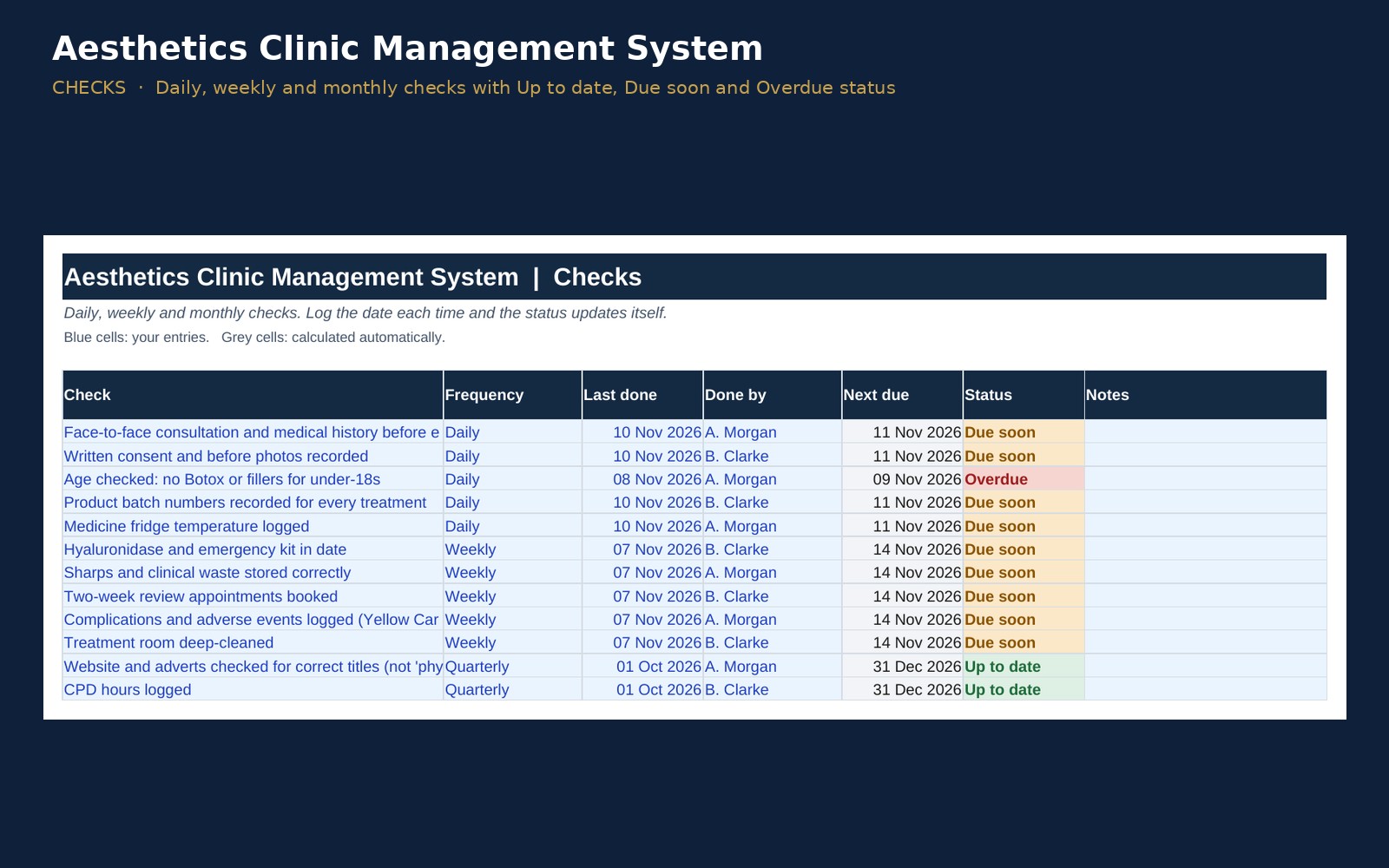
- Consultation and medical history before every new treatment, face to face.
- Written consent and before photos, every time.
- Age check: no cosmetic Botox or fillers for under-18s.
- Realistic expectations: most complaints come from expectations, not technique.
- Health data: treatment records and photos are special category data under UK GDPR. Store them securely, collect only what you need, and pay the ICO data protection fee.
9. Build a loyal client base
Aesthetics is a repeat business. Anti-wrinkle results typically last a few months, so a happy client returns several times a year. What builds a client list:
- Two-week reviews. They catch problems early and build trust, and they're the natural moment to book the next treatment.
- Treatment plans, not one-offs. Map out a year of care (anti-wrinkle, skin treatments and occasional filler) so clients know what to expect and budget for it.
- Skin treatments between injectables. Microneedling, peels and skin boosters keep clients coming back between toxin appointments.
- Referrals. Most clinics grow through word of mouth. Make it easy for happy clients to recommend you.
- Local visibility. A Google Business Profile with reviews, clear practitioner credentials and transparent pricing builds trust with nervous first-time clients.
- Credentials up front. Show your registration (GMC, NMC, GDC or GPhC), training and insurance clearly. Clients increasingly check.
Track consultation-to-treatment conversion and rebooking rates every month. They tell you whether your consultations and results are working.
10. Common mistakes new clinics make
1. Waiting for licensing before getting organised. Clinics with records, training and insurance in order will find the switch easy. Others may have to pause treatments. 2. Underpricing to compete with unregulated injectors. That's a race you can't win safely. 3. No real prescriber arrangement. Remote "prescription on request" without a proper consultation puts your registration at risk. 4. No complications plan. Hyaluronidase, an emergency protocol and complications training aren't optional extras. 5. Overbuying stock. Prescription products are expensive and expire. Order to your diary. 6. Advertising the medicine by name. Promote consultations and outcomes instead.
11. Run it like a clinic
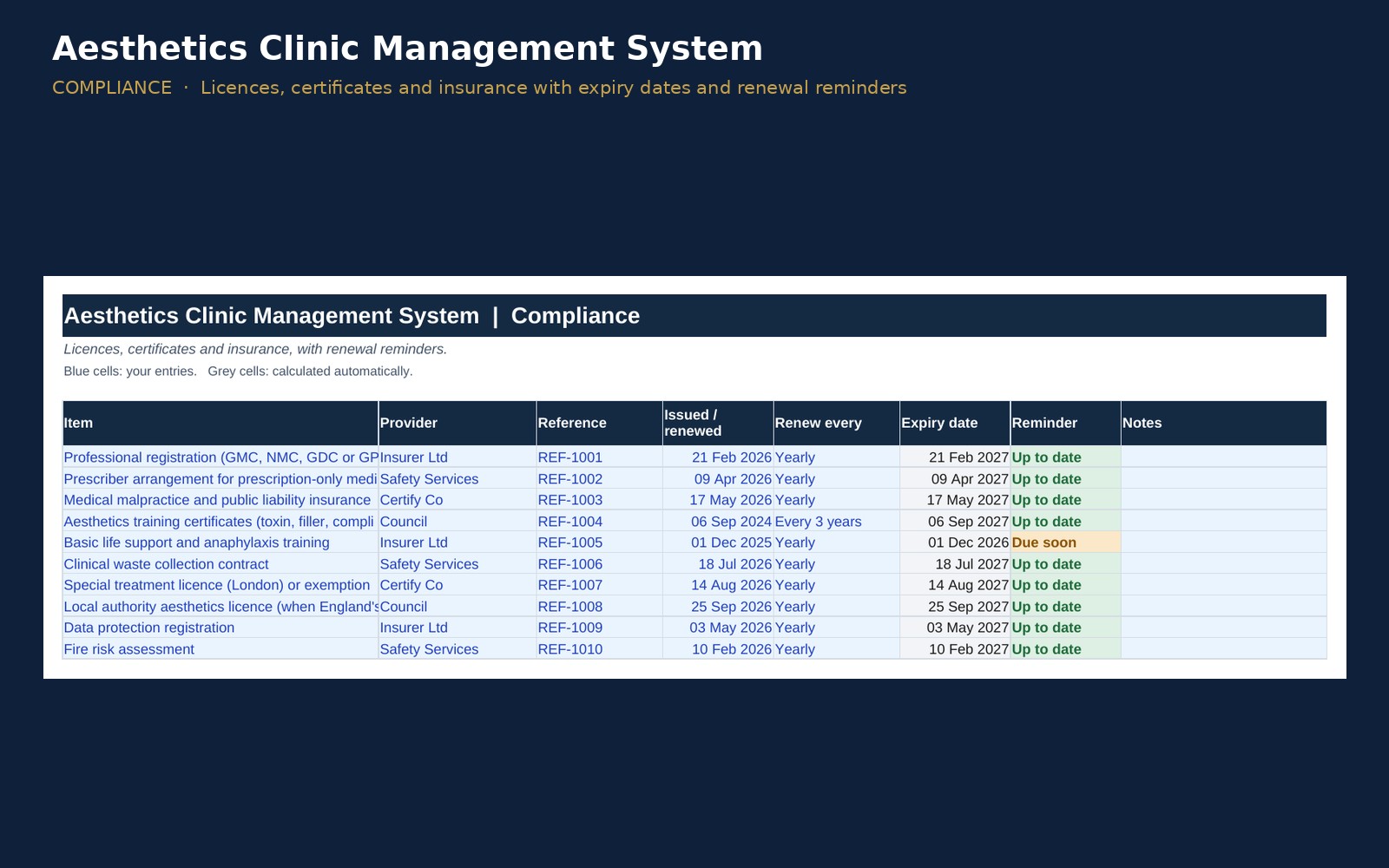
The **aesthetics clinic management spreadsheet** runs the business side in one Excel file for £15, with no subscription: - Treatments by type: anti-wrinkle, fillers, skin boosters, microneedling and peels, consultations and retail - Price, product cost, prescriber fees and room rent, with gross profit on every line - Invoices, debtors, a 12-week cash flow forecast and VAT summary - Daily checks: face-to-face consultation, consent and photos, age check, batch numbers, medicine fridge temperature - Weekly checks: hyaluronidase and emergency kit, sharps and clinical waste, two-week reviews, complications log, deep clean - Quarterly checks: correct titles in adverts, and CPD - A compliance register: professional registration, prescriber arrangement, insurance, training, life support, clinical waste, special treatment licence, licensing readiness, ICO fee, fire risk assessment - Risk assessments: vascular occlusion, anaphylaxis, infection, toxin side effects, needlestick, complaints, health data - Stock: toxin, filler, hyaluronidase, needles and cannulas, emergency kit, gloves, topical anaesthetic and aftercare packs
Planning a bigger clinic? The Medical & Aesthetics Clinic Financial Model forecasts revenue, staffing and profit over several years.
Your aesthetics start-up checklist
1. Check your professional registration and set up a genuine prescriber arrangement if you're not a prescriber. 2. Complete accredited training, including complications. 3. Insure every treatment you offer. 4. Set up emergency kit, hyaluronidase, life support training and an emergency protocol. 5. Arrange a medicine fridge, sharps handling and a clinical waste contract. 6. Check London special treatment licensing if relevant, and build for England's coming licensing scheme. 7. Work out costs and break-even treatments with the free aesthetics clinic start-up calculator. 8. Set up consent, photos, secure records and the ICO fee. 9. Check your marketing against medicines advertising rules. 10. Write a plan with the aesthetics clinic business plan template.
Want everything at once? The Aesthetics Clinic Full Business Pack includes the management system, the business plan template and all the free guides for £20.
Frequently asked questions
Do I need a licence to do Botox in England? Not yet. The law allows a licensing scheme, and the government has confirmed that Botox and facial fillers will be licensed by local authorities, but no start date has been announced. Some London boroughs already license special treatments.
Who can prescribe Botox? A UK-registered prescriber: a doctor, dentist, nurse prescriber or pharmacist independent prescriber, after a consultation.
What are the new high-risk procedure rules? Draft regulations published on 21 October 2026 would restrict high-risk procedures to doctors, dentists and certain other regulated healthcare professionals. The consultation closes on 13 January 2027. Botox and lip filler aren't covered by these draft rules.
Can I treat under-18s? No. Cosmetic Botox and certain fillers have been banned for under-18s in England since 1 October 2021.
How many treatments do I need to break even? In our worked example, about 22 treatments a month covers £1,500 of costs and £2,000 of pay.
Can I run an aesthetics clinic alongside my NHS job? Many nurses, dentists and doctors do. Check your employment contract and your professional regulator's guidance, make sure your insurance covers private aesthetic work, and register for Self Assessment once your trading income passes £1,000.
*Sources: Pabau and Harley Street Legal on England's licensing scheme (2026); CIEH and DHSC consultation of 21 October 2026; eduxpress November 2026 timeline; UCL (February 2026); TreatCompare and Pabau 2026 price data. This guide is general information, not legal or clinical advice.*