Sports massage sits right in the middle of the UK's wellness boom: runners, gym-goers, weekend footballers, cyclists and desk workers with sore backs and stiff shoulders all book it, many of them every few weeks. Health and wellness tops the list of sectors Brits say they'd most like to start a business in, according to a September 2026 Uswitch survey, and a sports massage business can start small: one couch, one qualification, a few regular clients.
Most guides tell you which course to take. This one covers what decides whether the business works: the qualification level that matches the work you want, the title you're legally allowed to use, the London licence most new therapists don't know about, real pricing, start-up costs, and how many treatments you need to break even.
1. Choose the qualification for the work you want
Sports massage qualifications in the UK are usually described in levels:
| Level | What it's commonly used for |
|---|---|
| Level 3 | The usual entry point, accepted by insurers and professional bodies |
| Level 4 | Commonly treated as the step to working with injured clients and more complex cases |
| Level 5 | Advanced injury management and rehabilitation |
Course prices seen in 2026 include Level 3 diplomas at about £1,000 to £1,500, Level 4 courses from under £1,000 to around £3,000, and Level 5 certificates at around £1,400 on top. Check that a course is Ofqual-regulated and recognised by the professional body and insurer you plan to use.
Work within your scope. Your insurance covers the work your qualification covers. When you see red flags, such as unexplained pain, numbness or signs of a serious condition, refer the client to their GP or a physiotherapist.
2. Use the right title: this one's a legal issue
"Physiotherapist" is a protected title. Using it without registration with the Health and Care Professions Council (HCPC) is a criminal offence.
"Sports massage therapist", "sports therapist", "massage therapist" and "soft tissue therapist" are not protected titles. You can use them, but describe your work accurately. Check your website, Google Business Profile, social media bios and adverts. Phrases like "physio-style treatment" can mislead clients and attract complaints.
3. The London licence most new therapists miss
In London, massage, including sports massage, is a "special treatment" under the London Local Authorities Act 1991 (the City of London uses its own older legislation).
- Premises offering massage need a special treatment licence from the borough.
- Therapists may also need to register with the council.
- Exemptions apply for therapists registered with certain bodies. The CNHC, for example, has exempted status agreed through the London Special Treatment Group for its registered massage therapists, including sports massage. Exemption lists also include full members of some professional associations.
- Fees vary by borough and treatment category. Check your borough's current fees before you budget.
Outside London, there's no equivalent licence for massage in most areas, but check with your council. Some have their own local rules.
4. Insurance and professional bodies
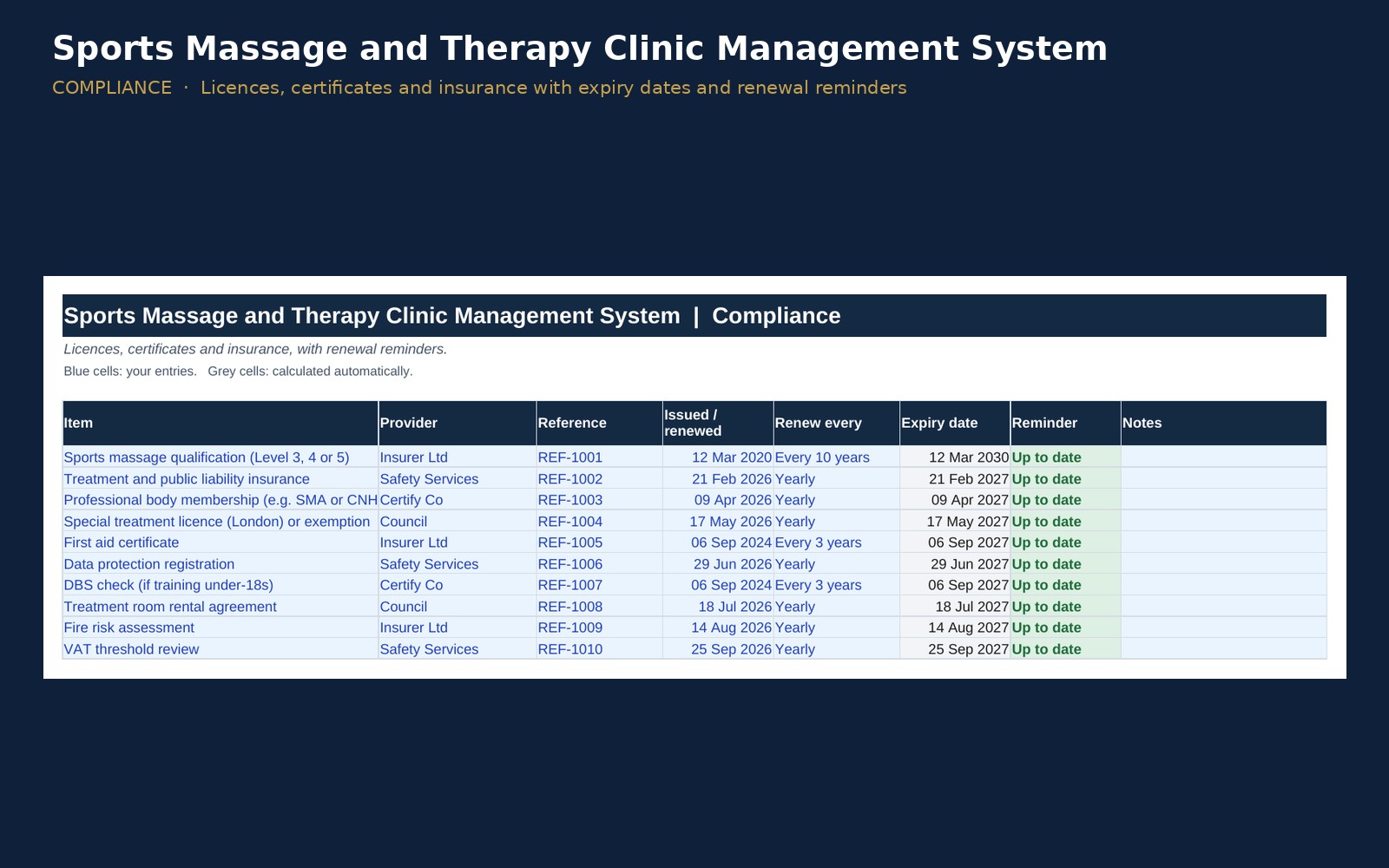
- Treatment and public liability insurance is essential, typically up to about £200 a year for a sports massage therapist.
- Professional body membership, such as the Sports Massage Association (SMA, about £90 to £130 a year), adds credibility and access to CPD.
- CNHC registration can help with London licensing exemptions and reassures clients.
5. What sports massage therapists earn
The National Careers Service lists massage therapist pay as variable, because most therapists are self-employed. Reported figures for 2026:
- Glassdoor: about £26,000 to £54,000 for sports massage therapists, with an average of about £38,000.
- Self-employed rates: around £35 to £50 an hour (Insure4Sport), £45 to £80 an hour (learndirect), and £75 to £120 in prime London areas.
These are indications, not guarantees. Your real income comes down to your price, how full your diary is, and your room rent.
6. What it costs to start
Our free start-up calculator uses three scenarios. These are planning figures, not quotes:
| Item | Lean | Base | High |
|---|---|---|---|
| Level 3 qualification | £0 | £1,000 | £1,500 |
| Level 4 qualification | £0 | £1,500 | £3,000 |
| Insurance (year 1) | £60 | £150 | £200 |
| Professional body membership | £0 | £110 | £130 |
| Couch, tools and linen | £150 | £500 | £1,200 |
| Oils, tape and consumables | £30 | £150 | £300 |
| Treatment room: deposit or first month | £0 | £400 | £1,200 |
| Special treatment licence (London only) | £0 | £0 | £600 |
| Booking software, website and marketing | £0 | £400 | £1,400 |
| Working capital reserve | £300 | £1,500 | £4,000 |
| Total | £540 | £5,710 | £13,530 |
The lean column assumes you're already qualified and working mobile. Treatment room rent and London licence fees vary widely, so get local quotes.
7. Work out your break-even treatments
In the calculator's base example: - £45 average price per treatment - £1.50 of oil, linen, tape and consumables per treatment - £550 a month of fixed costs (room rent £400, plus insurance, membership and software) - £1,500 a month owner-pay target
Each treatment contributes £43.50. Fixed costs plus pay are £2,050. £2,050 ÷ £43.50 = about 47 treatments a month to break even, roughly 12 a week. At 100 treatments a month, this therapist has about £2,300 a month above target.
Your diary is your income. Raising your price from £45 to £50 cuts break-even to about 42 treatments, and a few regular weekly clients make the whole business steadier.
8. Price and build regular income
- Offer 30, 45 and 60-minute options. Shorter sessions suit maintenance clients and fill gaps.
- Sell packages. Five or ten treatments paid upfront secure commitment and cash flow.
- Charge more for injury assessments and Level 4 work.
- Win sports club and corporate contracts. A weekly club session or workplace chair massage gives steady income.
- Work events. Races and tournaments bring volume and new clients, but price for your time and travel.
- Rebook before clients leave. It's the cheapest growth there is.
- Have a cancellation policy. A deposit or a 24-hour rule protects your diary.
9. Find your first clients
- Running clubs, football clubs and gyms: offer talks, taster sessions or a club discount.
- Partner with personal trainers and physiotherapists who refer clients needing maintenance or massage.
- Google Business Profile and reviews: "sports massage near me" searches drive bookings.
- Event work: a busy race finish line introduces you to dozens of local runners.
- Specialise: runners, cyclists, desk workers with posture problems, or older active adults.
10. Keep clients safe and protect their data
- Consultation and medical history for every new client, screening for contraindications such as suspected DVT or infection.
- Consent recorded for every treatment.
- Hygiene: clean linen and couches between clients, and hand hygiene throughout.
- Allergies: ask about oils and tape, and use hypoallergenic products where needed.
- Your own body: correct couch height, good technique and breaks between clients prevent the repetitive strain that ends careers.
- Health data: treatment notes are special category data under UK GDPR. Store them securely and pay the ICO data protection fee.
11. Common mistakes new therapists make
1. Working beyond their qualification. Treating injuries your level and insurance don't cover puts clients at risk and can void your cover. 2. Using the wrong title. "Physio" in an advert or bio when you're not HCPC-registered is an offence, not just a marketing slip. 3. Opening in London without checking licensing. Premises and therapists may need a licence or registration unless an exemption applies. 4. Underpricing to fill the diary. Cheap prices attract clients who don't value the work, and they're hard to raise later. 5. Renting a room before the clients are there. Start mobile or pay-per-session until your diary justifies a fixed monthly rent. 6. No cancellation policy. Every no-show is an hour you can't sell again. 7. Neglecting your own body. Repetitive strain in hands, wrists and back ends more massage careers than lack of clients.
12. Run it like a business
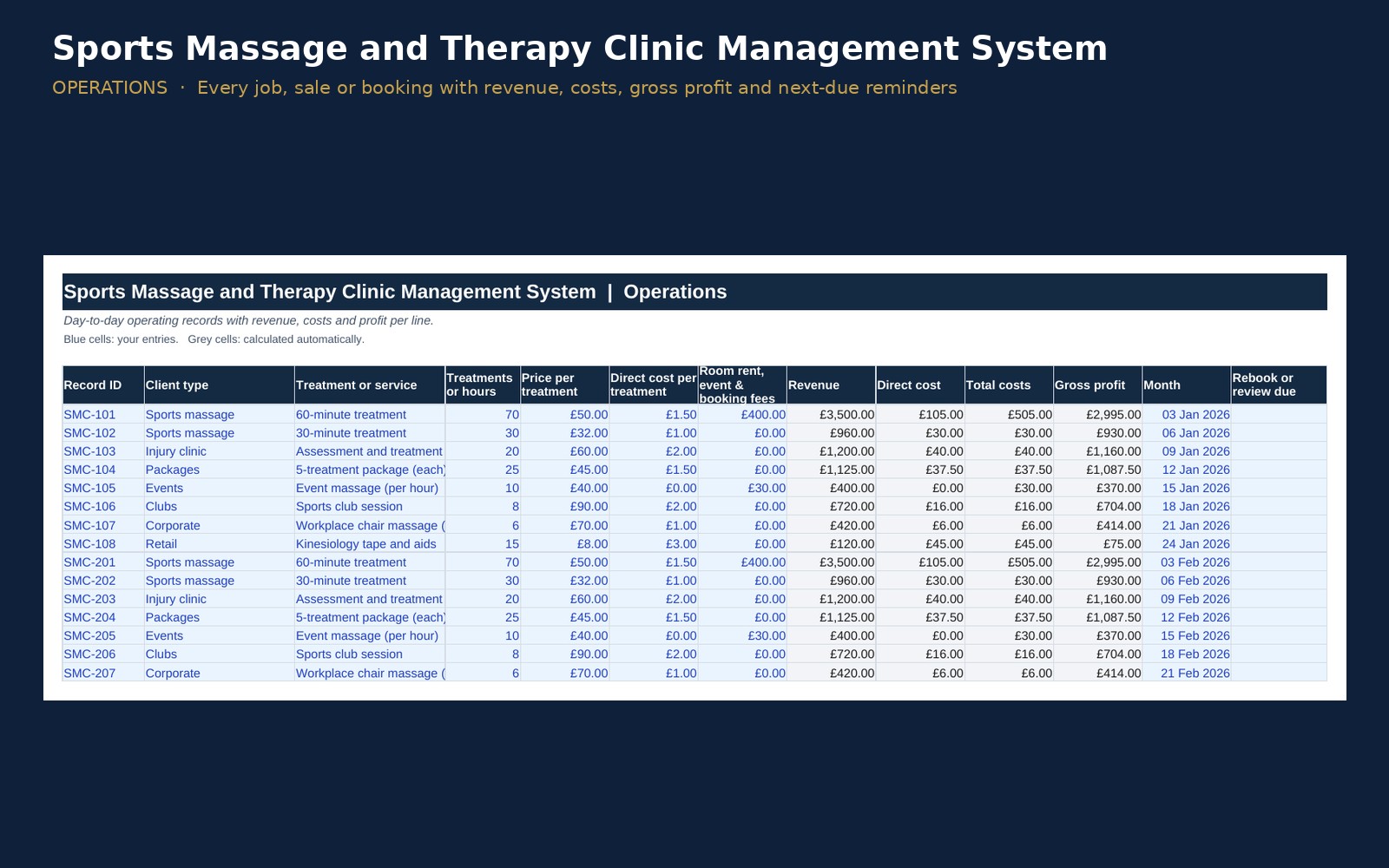
The **sports massage business spreadsheet** runs the business side in one Excel file for £15, with no subscription: - Treatments by type: 60 and 30-minute treatments, injury assessments, packages, events, clubs, corporate and retail - Price, consumables, room rent and fees, with gross profit on every line - Invoices, debtors, a 12-week cash flow forecast and VAT summary - Daily checks: consultation and medical history, consent, linen and couch cleaning, hygiene, bookings - Weekly checks: first aid, red-flag referrals logged, treatment notes, package balances - Quarterly checks: your website and adverts use the correct titles, and CPD - A compliance register: qualification, insurance, professional body, special treatment licence or exemption, first aid, ICO fee, DBS, room agreement, fire risk assessment - Risk assessments: aggravated injuries, missed contraindications, allergies, infection, lone working, health data, therapist strain
Your sports massage start-up checklist
1. Choose the qualification level that matches the work you want. 2. Get insurance and join a professional body. 3. Use accurate titles. Never "physiotherapist" unless HCPC-registered. 4. Check special treatment licensing if you're in London, or local rules elsewhere. 5. Work out your costs and break-even treatments with the free sports massage start-up calculator. 6. Choose mobile, room rental or a clinic, and agree terms in writing. 7. Set up consultation forms, consent and secure notes, and pay the ICO fee. 8. Set prices, packages and a cancellation policy. 9. Write a plan with the sports massage clinic business plan template.
Want everything at once? The Sports Massage Clinic Full Business Pack includes the management system, the business plan template and all the free guides for £20.
Frequently asked questions
Do I need a licence to do sports massage in the UK? In London, premises offering massage need a special treatment licence, and therapists may need to register, unless an exemption applies (for example for CNHC-registered therapists). Outside London, most areas don't license massage, but check with your council.
Can I call myself a physiotherapist? Only if you're registered with the HCPC. "Physiotherapist" is a protected title, and misusing it is a criminal offence. "Sports massage therapist" and "sports therapist" are not protected.
What qualification do I need to treat injuries? Level 3 is the common entry point. Level 4 is commonly treated as the step to working with injured clients. Check what your insurer covers at each level.
How much should I charge for sports massage? Reported self-employed rates range from around £35 to £80 an hour, and more in prime London areas. Work out your break-even first, then price above it.
How many clients do I need? In our worked example, about 47 treatments a month covers £550 of costs and £1,500 of pay. That's roughly 12 a week.
Do I need to register as self-employed? Yes, once your total trading income passes £1,000 in a tax year. Register for Self Assessment by 5 October after that tax year ends, and keep records of room rent, insurance, CPD and supplies.
Is sports massage only for athletes? No. Many regular clients are desk workers, gym-goers and people with everyday aches. Marketing to them as well as athletes fills weekday daytime slots that sports clubs leave empty.
*Sources: CNHC; London borough licensing pages (Hounslow, City of London, Hammersmith & Fulham); HCPC protected titles; Insure4Sport; learndirect; Glassdoor data reported by OriGym; 2026 course provider prices; Uswitch September 2026. This guide is general information, not legal or medical advice.*