# How to Start a Recruitment Agency in the UK
Most recruitment agency owners start after years on a desk, with a niche and clients who already know them. Finding candidates is the skill. Following the Conduct Regulations, writing terms that make your fees enforceable, and holding cash until fees arrive decide whether the agency lasts.
This guide covers the rules, perm versus temp, what it costs to start, fees, and how many placements you need to break even.
1. Pick your niche
Specialist agencies win on knowledge and contacts. Choose a sector and level you know, and decide whether you'll place permanent staff, supply temps and contractors, or both.
2. Know the rules
- There's no general recruitment licence, but you must follow the Conduct of Employment Agencies and Employment Businesses Regulations 2003. Since 7 April 2026 they're enforced by the Fair Work Agency.
- You can't charge work-seekers for finding them work, except in entertainment and modelling.
- Supplying workers to agriculture, shellfish gathering or related food processing needs a gangmaster licence; working without one is a criminal offence.
3. Terms, checks and records
- Agree written terms with every client before you introduce candidates. A transfer fee is generally unenforceable unless your terms offer an extended hire period instead.
- Get the role details from the client, and check each candidate's identity, qualifications and right to work. For roles with vulnerable people, get two written references.
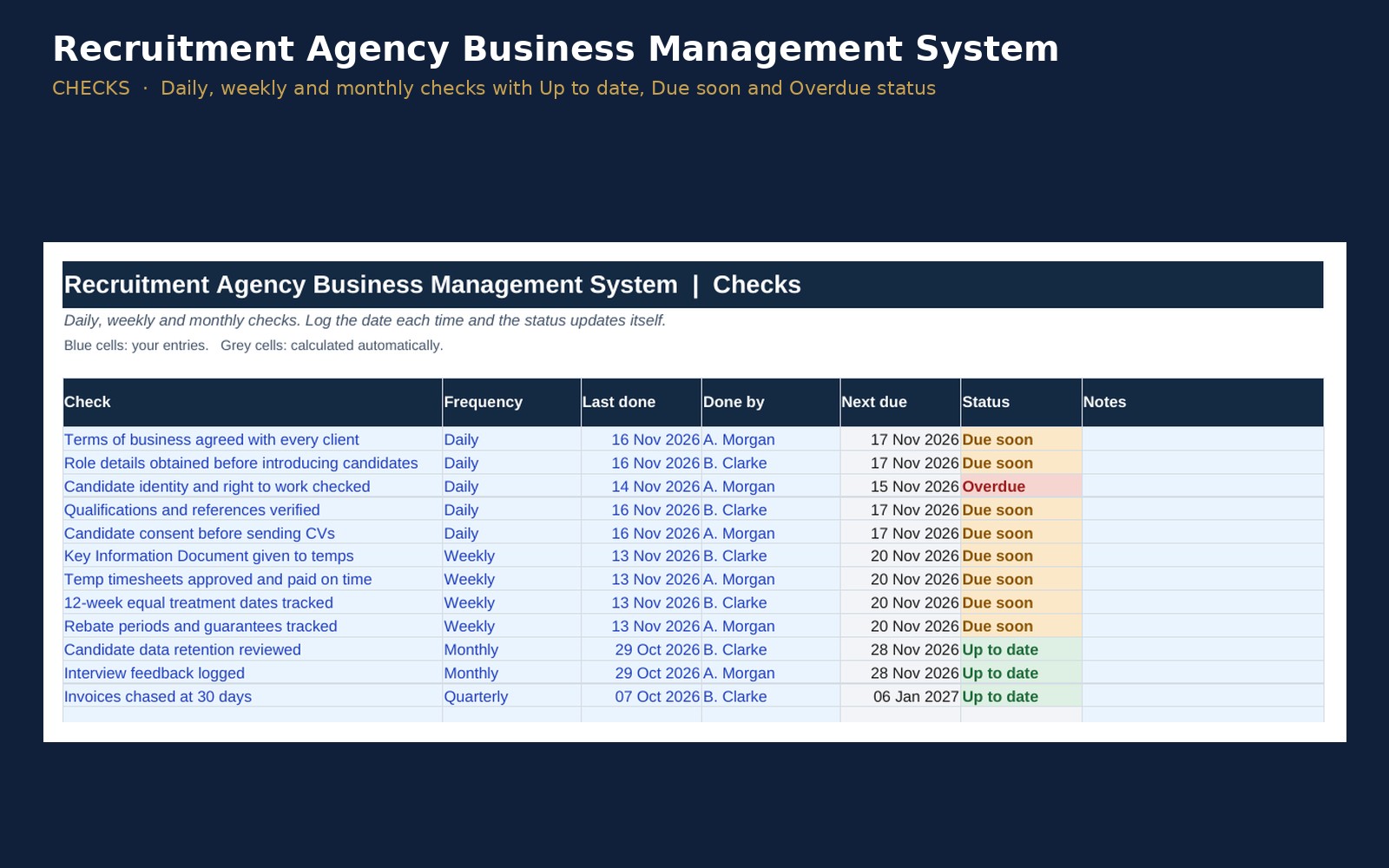
- Give temps a Key Information Document before agreeing terms, and keep records for at least 12 months.
4. What it costs to start
Our free calculator's planning figures:
| Item | Lean | Base | High |
|---|---|---|---|
| Company registration and ICO fee | £52 | £152 | £178 |
| Insurance (year 1) | £300 | £900 | £2,500 |
| CRM and job boards (first 3 months) | £300 | £3,000 | £8,000 |
| Website and branding | £200 | £1,500 | £5,000 |
| Terms of business and contracts | £0 | £800 | £2,500 |
| Office or co-working | £0 | £1,500 | £10,000 |
| Laptop, phone and software | £500 | £1,500 | £3,000 |
| Compliance checks and memberships | £0 | £500 | £1,500 |
| Working capital reserve | £3,000 | £10,000 | £30,000 |
| Total | £4,352 | £19,852 | £62,678 |
Work through your own figures with the free recruitment agency startup calculator.
5. Perm versus temp
Perm fees are paid once the candidate starts, often with a rebate if they leave early. A temp desk earns a margin on every hour worked, but you're the paymaster: temps must be paid on time even if the client pays late, with holiday pay, at least the National Living Wage (£12.71 an hour from 1 April 2026) and pension auto-enrolment. After 12 weeks in the same role, agency workers are entitled to the same basic pay and conditions as the hirer's staff.
6. Insurance and data
Get professional indemnity and public liability cover, and employers' liability for your staff and any temps you employ. Pay the ICO data protection fee, £52 a year for micro businesses, and only send CVs with the candidate's consent.
7. Set your fees
Recruitly's 2026 guide gives:
| Work | Typical fee |
|---|---|
| Entry-level and volume roles | 15% or below of salary |
| Mid-level to senior roles | 17.5% to 20% |
| Senior or hard-to-fill roles | 20% to 25% |
| Retained search | 25% to 33% |
| Temp markup on pay rate | 15% to 30% |
| Professional contractors | 10% to 18% |
On a £30,000 salary, a 16% fee is £4,800.
8. Work out your break-even
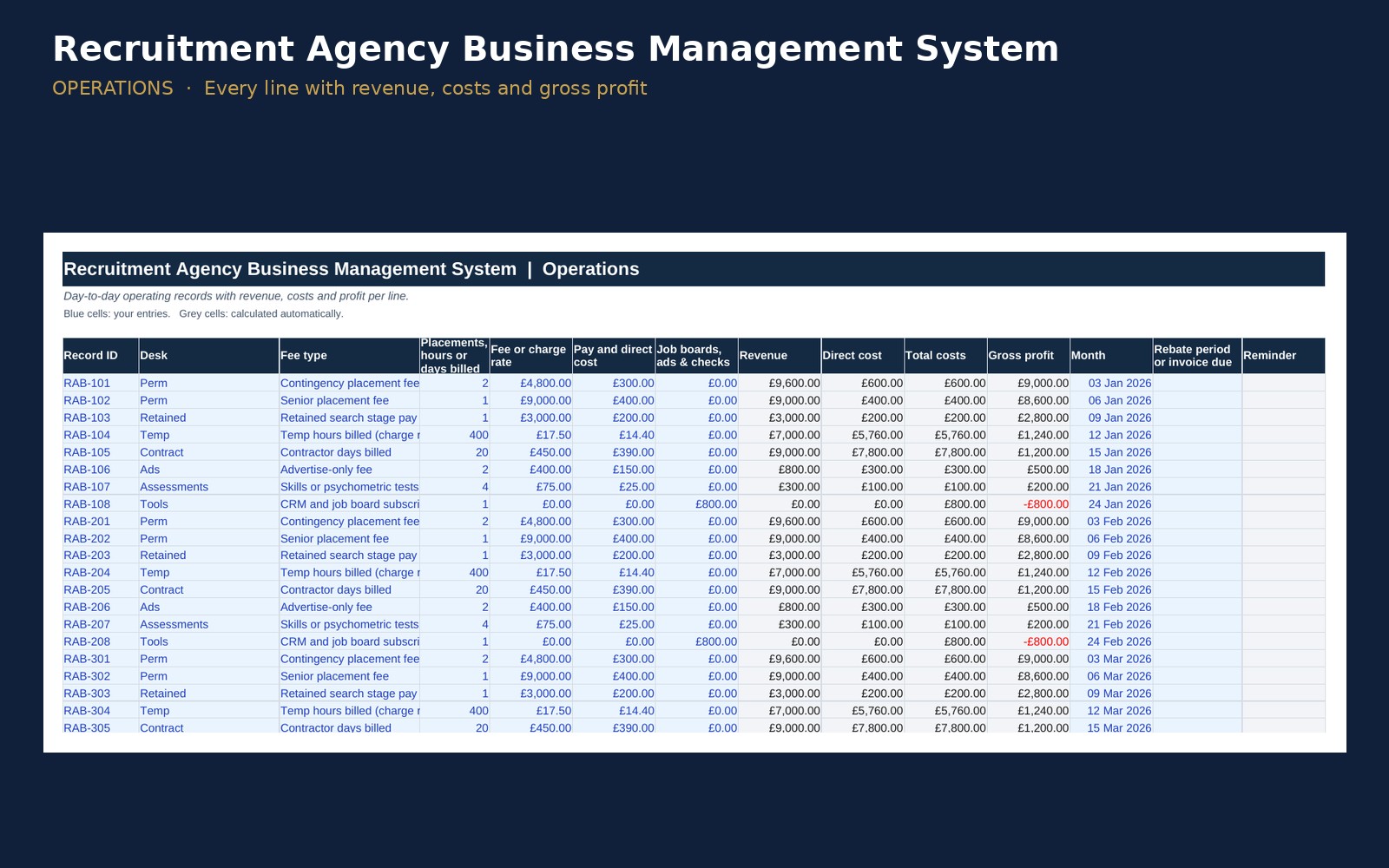
Our calculator's base example earns £4,800 per placement with £300 of costs, against £2,200 of monthly CRM, job board and office costs and a £2,500 owner-pay target. That needs about 2 placements a month. Fees arrive after the candidate starts, so hold at least 3 months of costs in cash.
9. Win clients and candidates
- A clear niche clients remember
- LinkedIn content and candidate referrals
- Fast, well-matched shortlists
- Repeat clients on signed terms
10. Run it like a business
Track placements, average fee, CV-to-interview and interview-to-offer ratios, temp margin and debtor days every month. Keep terms, checks and records together so you can produce them if asked.
Your recruitment agency business start-up checklist
- [ ] Niche chosen
- [ ] Business set up
- [ ] Terms of business signed
- [ ] Right to work and reference checks
- [ ] Key Information Document (temps)
- [ ] Gangmaster licence if needed
- [ ] Professional indemnity and employers' liability
- [ ] ICO fee
- [ ] Break-even placements known
- [ ] Cash reserve for the fee gap
Run it properly from day one
The **Recruitment Agency Business Management System** is a recruitment agency business spreadsheet that tracks every order, cost, invoice and VAT return, with checks, compliance dates, risks and stock in one Excel file. It costs £15 once, with no subscription. Planning to borrow? The Recruitment Agency Business Plan Template (£10) is laid out the way lenders expect, or get both with every free guide in the Full Business Pack for £20.
Next, read how much a recruiter earns and the KPIs to track.
Related: Letting agency startup costs
Related: Estate agency startup costs
Frequently asked questions
How much does it cost to start a recruitment agency? Working from home on a permanent desk, about £4,350 in our calculator. A base setup with CRM, job boards, legal terms, insurance and a cash reserve is around £19,850.
Do I need a licence to start a recruitment agency? No general licence is needed, but you must follow the Conduct Regulations 2003. Supplying workers to agriculture, shellfish gathering or related food processing needs a gangmaster licence.
How much do recruitment agencies charge? Recruitly's 2026 guide puts contingency permanent fees at 15% to 20% of first-year salary, and temp markups at 15% to 30%.
Can a recruitment agency charge candidates? No. Work-seekers can't be charged for finding work, except in entertainment and modelling.
How much do recruiters earn? The National Careers Service gives £25,000 to £40,000 for employed recruitment consultants, usually plus commission.