# How to Start a Clothing Alterations Business in the UK
People buy clothes online that don't quite fit, and fewer people sew at home. That leaves steady demand for hems, zips, taking in and bridal work, and a good alterations business gets most of its work from word of mouth.
This guide covers setup, kit, terms, what it costs to start, real prices, and how many alterations you need to break even.
1. Decide: home or shop
Most start from home. Check your mortgage or tenancy, home insurance and whether customers visiting affects planning. A home business usually doesn't pay business rates unless part of the home is used only for the business (GOV.UK). A shop brings walk-in trade but adds rent and rates.
2. Register the business
No licence is needed. Register for Self Assessment or set up a limited company.
3. Kit out
A heavy-duty or industrial straight-stitch machine, an overlocker, a steam iron and pressing kit, and a dummy cover most work. Keep zips and thread in common colours.
4. What it costs to start
Our free calculator's planning figures:
| Item | Lean | Base | High |
|---|---|---|---|
| Sewing machine (heavy-duty or industrial) | £300 | £1,000 | £2,500 |
| Overlocker | £0 | £400 | £1,200 |
| Steam iron, press, dummy and tools | £100 | £400 | £1,000 |
| Zips, thread and notions stock | £50 | £200 | £500 |
| Insurance (year 1) | £100 | £250 | £600 |
| Studio or shop fit-out | £0 | £500 | £8,000 |
| Website, signage and Google profile | £100 | £500 | £1,500 |
| Card reader and ticketing | £50 | £150 | £400 |
| Working capital reserve | £500 | £1,000 | £3,000 |
| Total | £1,200 | £4,400 | £18,700 |
Work through your own figures with the free clothing alterations startup calculator.
5. Insurance and terms
Get public liability cover (the average is £78.27 a year, MoneySuperMarket) plus cover for customers' garments in your care. The Consumer Rights Act 2015 requires services to be done with reasonable care and skill. Write clear terms on fittings, deposits and uncollected items.
6. Build a timed price list
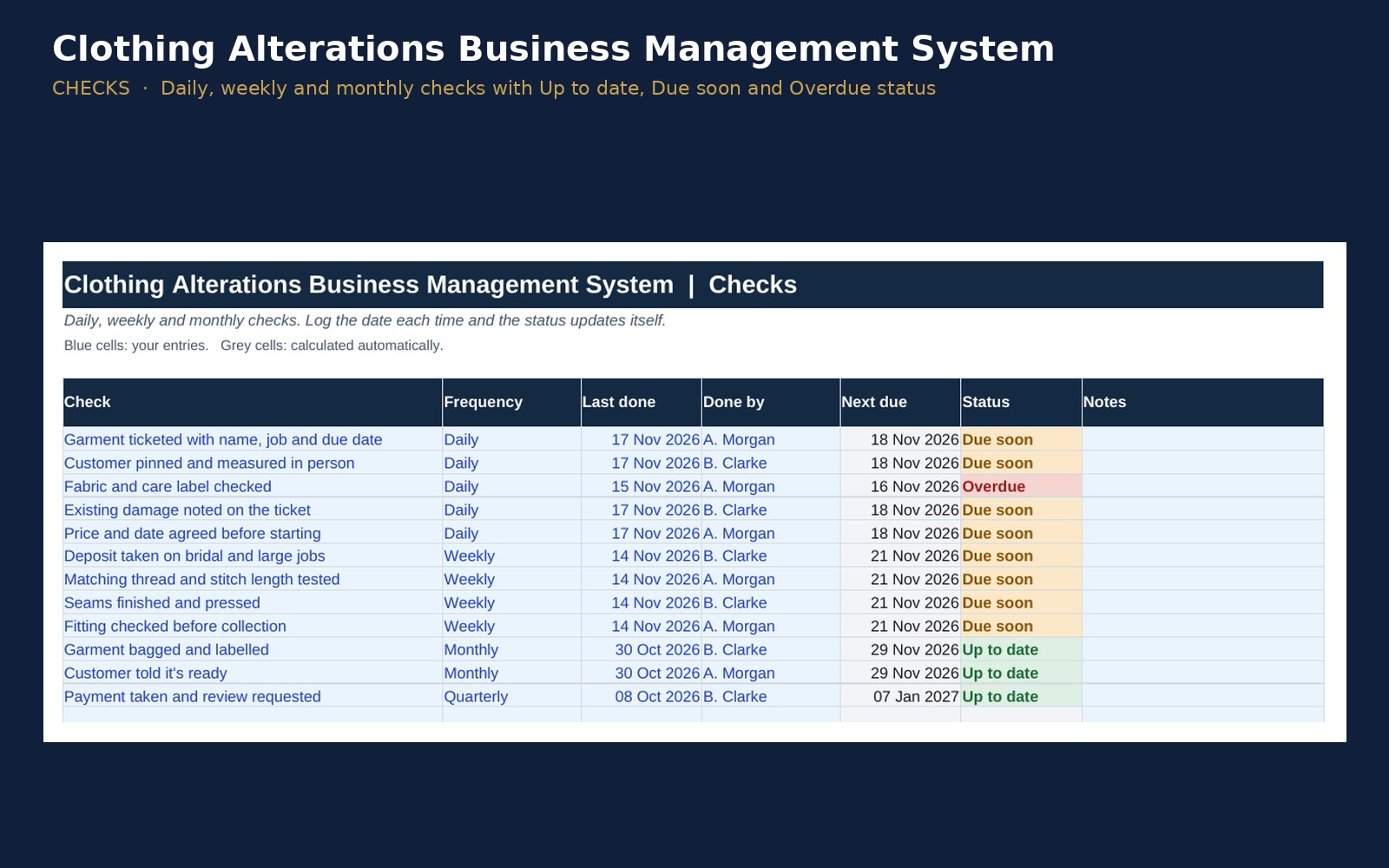
Time each job type and price it so every alteration pays your hourly target. Ticket every garment with the customer's name, the job and the due date, and take deposits for bridal, prom and tailored work.
7. Price your work
| Job | Price |
|---|---|
| Trouser hem (Airtasker, Nov 2025) | about £10 |
| Take in a dress | about £18 |
| Shorten a full-length dress | about £25 |
| Take in a coat or jacket | about £45 |
| Median alteration | about £30 |
Mumsnet posters in 2026 paid £12 to £50 for typical jobs and said dry cleaners are often cheaper, so they're also a source of trade work.
8. Work out your break-even
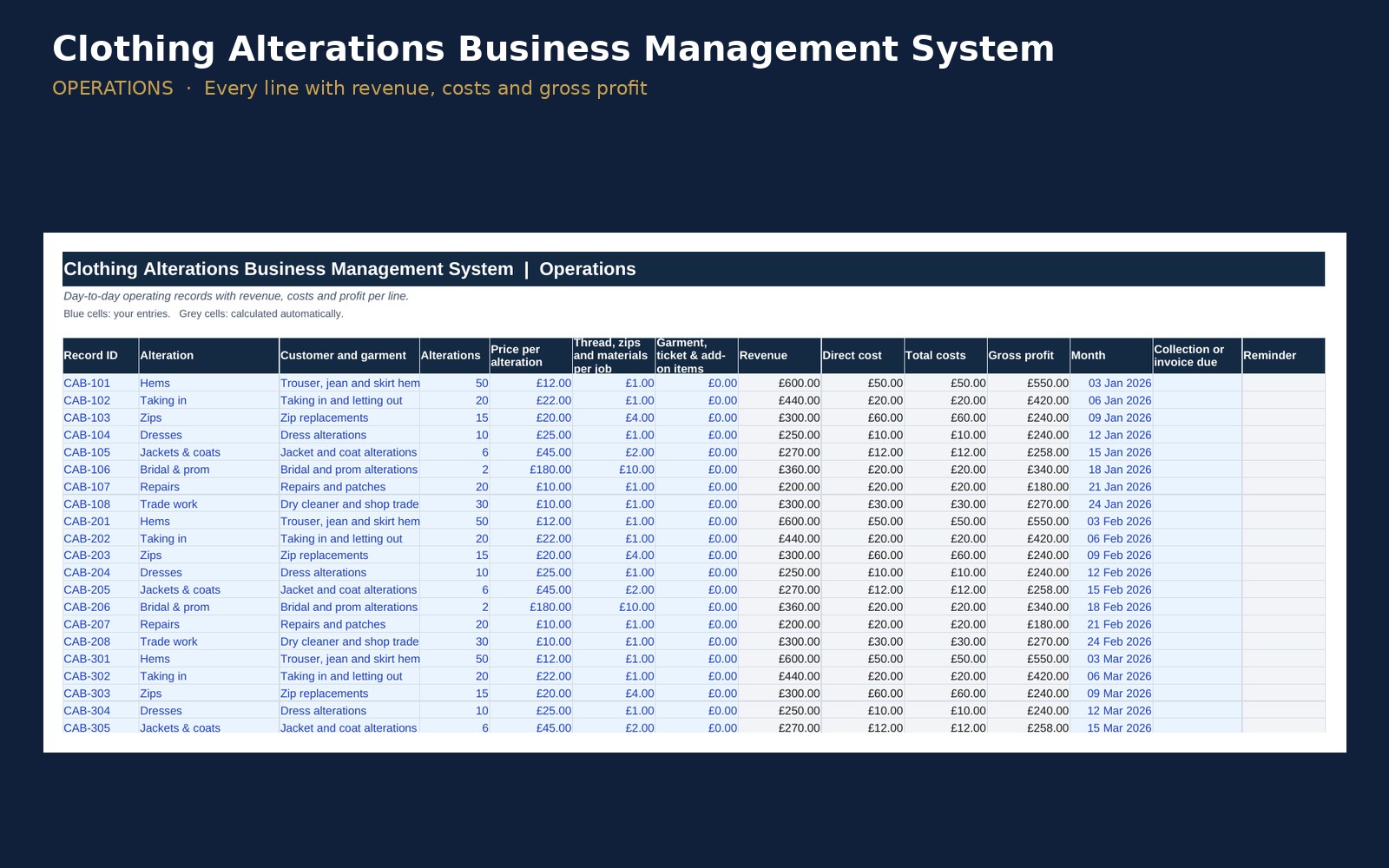
Our calculator's base example averages £18 an alteration with £1.50 of thread and materials, against £250 of monthly fixed costs and a £1,800 owner-pay target. That needs about 125 alterations a month, roughly 29 a week.
9. Win the work
- Google Business Profile with photos and your price list
- Dry cleaners and bridal shops that send work out
- Local Facebook groups
- Schools and dance groups for uniforms and costumes
10. Run it like a business
Track alterations, average price, revenue per hour, turnaround and remakes every month. Keep tickets, deposits and insurance in one place.
Your clothing alterations business start-up checklist
- [ ] Home or shop
- [ ] Business set up
- [ ] Machine and overlocker
- [ ] Pressing kit
- [ ] Insurance
- [ ] Written terms
- [ ] Timed price list
- [ ] Ticket system
- [ ] Break-even alterations known
- [ ] Trade partners
Run it properly from day one
The **Clothing Alterations Business Management System** is a clothing alterations business spreadsheet that tracks every order, cost, invoice and VAT return, with checks, compliance dates, risks and stock in one Excel file. It costs £15 once, with no subscription. Planning to borrow? The Clothing Alterations Business Plan Template (£10) is laid out the way lenders expect, or get both with every free guide in the Full Business Pack for £20.
Next, read how much a seamstress or tailor earns and the KPIs to track.
Related: Clothing brand startup costs
Related: Ironing and laundry business startup costs
Frequently asked questions
How much does it cost to start a clothing alterations business? Working from home, about £1,200 in our calculator. A base setup with an industrial machine, overlocker, studio fit-out and marketing is around £4,400.
Do I need a qualification to do alterations? No licence or qualification is required, but you need the skill to do the work with reasonable care, as the Consumer Rights Act 2015 requires.
How much should I charge for alterations? Airtasker's November 2025 guide puts a trouser hem at about £10, taking in a dress at about £18, and the median alteration at £30.
Can I run an alterations business from home? Yes. Check your mortgage or tenancy, home insurance and planning if customers visit.
Do I pay business rates working from home? Usually not, unless part of your home is used only for the business. GOV.UK explains when rates apply.