Starting a carpet cleaning business can be a practical route into mobile services: you can begin with a portable machine and a vehicle you already own, and good work can lead to repeat bookings and referrals from homeowners, landlords and letting agents.
This guide answers the questions people actually ask before they start: what customers pay, what it costs to set up, whether a franchise is worth it, what to charge, what insurance you need, and whether carpet cleaning is a good business. The startup figures come from our free carpet cleaning start-up calculator, and the prices from published 2026 UK data.
1. Is carpet cleaning a good business in the UK?
It can be, if you price properly and fill your diary. The business has real strengths:
- Low entry cost. A portable hot water extraction machine starts at a few hundred to a few thousand pounds, far less than most trades.
- No premises. You work in customers' homes and businesses.
- Repeat and referral work. Homeowners, landlords and letting agents need carpets cleaned again and again.
- Add-on services. Upholstery, rugs, stain protection and end-of-tenancy work all raise the value of each visit.
The challenges are just as real: - Competition is local and price-driven, so cheap operators can set customer expectations. - It's physical work. Machines, hoses and furniture are heavy. - Travel time eats into profit if jobs are spread out.
The businesses that do well treat it as a business from day one: they know their numbers, price above their break-even and build repeat customers.
2. What customers pay in 2026
Published UK prices vary by room size, carpet condition, access and location. Checkatrade's 2026 cost guide gives a useful national reference:
- Small room: about £50.
- Three-bedroom property: about £250 on average.
- Minimum visit charge: around £85 may apply.
- Commercial carpet cleaning: budget around £4 per square metre.
These are consumer price estimates, not guaranteed rates for a cleaning business. The site's existing start-up page gives broader ranges for single and double rooms. Check local competitors, quote for the actual job, and make your minimum charge clear.
What this means for you: one small room may not cover travel and set-up time. Multi-room bookings, whole-house jobs and add-ons can make each visit more viable.
3. What it costs to start
Our free start-up calculator uses these typical UK ranges:
| Item | Typical UK range |
|---|---|
| Hot water extraction machine (portable) | £800 to £4,000 |
| Pre-spray chemicals (starter kit) | £100 to £250 |
| Spotting kit (stain treatment) | £80 to £200 |
| Grooming rake, protector tabs and corner guards | £70 to £150 |
| Wet/dry vacuum for pre-vacuuming | £80 to £200 |
| Public liability insurance (£1m minimum) | £100 to £250 a year |
| Business registration | Free as a sole trader; £100 online as a limited company (Companies House) |
| Website or booking page | £100 to £300 a year |
| Truckmount alternative (excluded from portable total) | £3,000 to £12,000 used; £8,000 to £25,000 new |
| Vehicle purchase (excluded from portable total) | £3,000 to £12,000 |
Without vehicle purchase, the listed portable setup totals £1,330 to £5,570.
The portable setup total follows the ranges in the free calculator. It excludes buying a vehicle, a paid business bank account and optional trade-body membership; price those separately for your circumstances.
Portable or truckmount? Most new carpet cleaners start portable. It's cheaper, works in flats and terraces where parking is difficult, and lets you test demand. A used truckmount typically costs less than a new one, but both require a suitable van and higher capital. Upgrade only when your diary and job mix support it.
4. Learn the methods properly
Most carpet cleaners use one or more of three common methods:
- Hot water extraction (often called steam cleaning): the standard for deep cleaning most domestic carpets.
- Encapsulation: low-moisture foam or solution, faster drying, popular for commercial carpets.
- Dry compound cleaning: for delicate fibres and carpets that can't take much water.
Knowing which method suits which fibre (wool, synthetic or blends) helps reduce the risk of shrinkage, colour run and complaints. A recognised training course can pay for itself by helping you avoid an expensive mistake. It also gives you something to show customers and letting agents.
5. Franchise or independent?
People often search for carpet cleaning franchise prices. Here's the trade-off:
- A franchise may provide a brand, training, an operating system and marketing support. The total depends on the brand and package. Ask for an itemised current quote covering equipment, vehicle, training, territory, working capital and all ongoing fees before comparing it with an independent start.
- Independent setup is £1,330 to £5,570 for the portable equipment and core costs above, excluding vehicle purchase. You build the brand, find the customers and learn the methods yourself.
A sensible test: work out how many additional jobs the franchise would need to generate to cover its fees. If you're confident you can win customers locally, starting independently may leave more room in each job's margin.
6. Work out what to charge
Don't copy the cheapest competitor. Work backwards from what you need. The pricing calculator uses this method:
1. Monthly take-home you need, say £2,500, so £30,000 a year. 2. Gross it up for tax and National Insurance (roughly 25%): about £40,000. 3. Add your annual business costs, say £4,000 (insurance, chemicals, fuel, phone, software, marketing). That makes £44,000 of required revenue. 4. Your working pattern: 44 working weeks × 5 days × 2.5 jobs a day = 550 jobs a year. 5. Minimum price per job: £44,000 ÷ 550 = £80. 6. Add a 15% buffer for quiet periods: about £92 per job.
That lines up with the published reference: a three-bed house averages around £250, while a minimum visit charge of about £85 helps cover travel and set-up. The lesson is that your average job must be well above a single-room price, which is why multi-room bookings and add-ons matter.
Add-ons that raise your average job value: - Stain protector, around £15 a room (Checkatrade) - Stain and odour treatments, priced to cover the product, application time and job risk - Upholstery and rug cleaning - Stairs and landings - End-of-tenancy packages with letting agents (see our end-of-tenancy cleaning start-up costs)
7. Insurance and legal basics
- Public liability insurance (at least £1m) covers damage to customers' property and injury claims. It isn't legally required, but you shouldn't start without it.
- Employers' liability insurance is a legal requirement as soon as you employ anyone.
- Van insurance must cover business use.
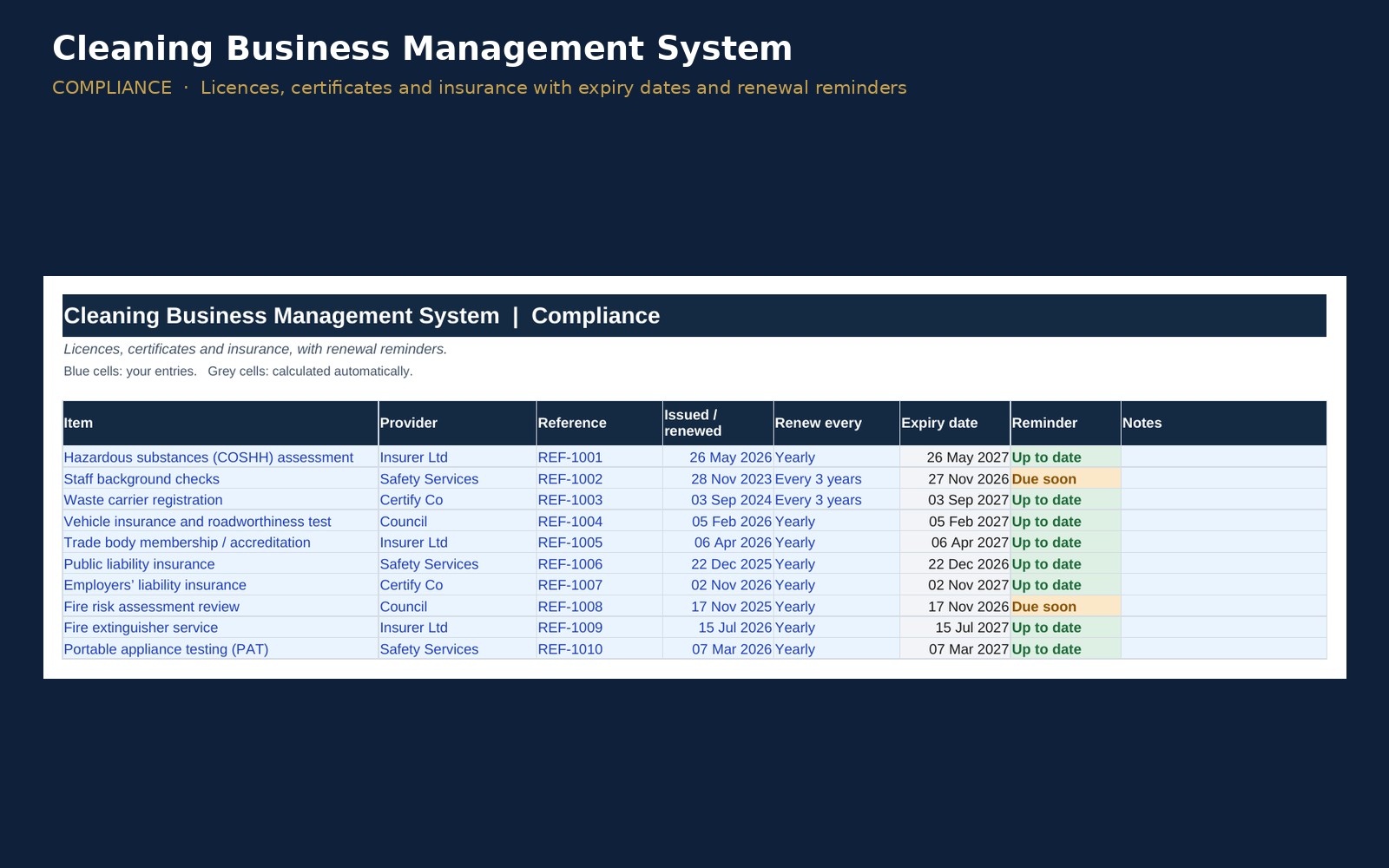
- Chemicals: keep safety data sheets and follow COSHH (Control of Substances Hazardous to Health) rules for the products you use.
- Waste water: dispose of dirty water properly, into a foul drain or toilet, not a surface water drain.
- Register as self-employed or set up a limited company. Once your trading income passes £1,000 a year, register for Self Assessment.
- Trade body membership and training add credibility with customers and letting agents.
8. Find your first customers
- Google Business Profile with photos and reviews. Most carpet cleaning searches are local ("carpet cleaning near me").
- Letting agents and landlords need regular end-of-tenancy cleans: steady, repeat work.
- Before-and-after photos on social media and your website.
- Referral rewards for happy customers.
- Commercial contracts with offices, care homes and holiday lets for regular weekday work.
- Rebooking reminders: many households clean carpets every 12 to 18 months. Contact them when they're due.
9. Is carpet cleaning profitable?
Profit depends on three numbers you control: - Average job value: raised by multi-room bookings, add-ons and minimum charges. - Jobs per day: raised by grouping jobs by area to cut travel. - Costs: chemicals, fuel, insurance and machine maintenance.
Using the calculator's example: at 550 jobs a year and an average of £92, revenue is about £50,600 against £4,000 of business costs, before tax. Push the average job to £120 with add-ons and multi-room bookings, and revenue rises to about £66,000 for the same number of jobs. That's why your average job value matters more than anything else.
For more on what cleaning business owners take home, see how much does a cleaner earn in the UK. For the numbers to track every month, see cleaning business KPIs.
10. Common mistakes new carpet cleaners make
1. Pricing single rooms too cheaply. Without a minimum charge, travel and set-up eat the profit. 2. Buying a truckmount too early. Start portable, then upgrade when demand proves it. 3. No pre-inspection. Check carpet type and condition, and agree what's possible, before you start. 4. Over-wetting carpets. It leads to long drying times, shrinkage and complaints. 5. No repeat-booking system. The best customers are the ones you already have. 6. Not tracking jobs and costs. You can't improve what you don't measure.
11. Run it like a business
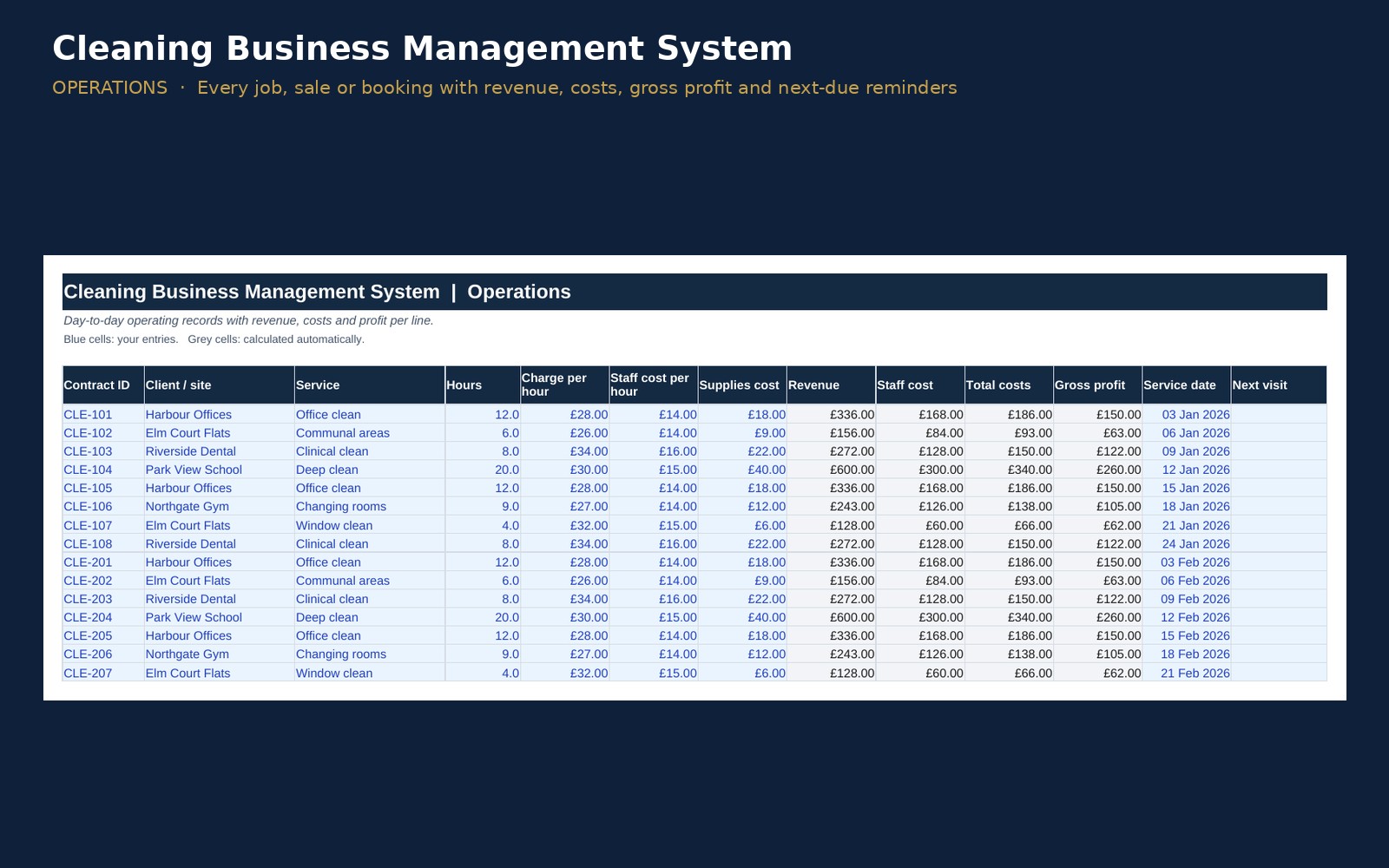
The **cleaning business management system** runs a carpet cleaning business in one Excel file for £15, with no subscription: - Jobs, invoices and VAT - A 12-week cash flow forecast - Stock for chemicals and consumables - Daily and weekly checks - A compliance register with renewal reminders - Risk assessments - A dashboard with job value, margin and profit
Your carpet cleaning start-up checklist
1. Work out your start-up costs with the free carpet cleaning start-up calculator. 2. Decide between portable and truckmount, and between independent and franchise. 3. Get public liability insurance (and employers' liability if you hire). 4. Set your minimum price per job and a minimum charge. 5. Build an add-on menu: stain protection, upholstery, rugs, stairs. 6. Set up a Google Business Profile and collect reviews. 7. Approach letting agents and landlords for end-of-tenancy work. 8. Register for Self Assessment once trading income passes £1,000. 9. Write a plan with the cleaning business plan template.
Want everything at once? The Cleaning Full Business Pack includes the management system, the business plan template and the free guides for £20. Adding ovens to your services? See our oven cleaning start-up costs.
Next step: use the Carpet Cleaning Business Management System and Carpet Cleaning Business Full Business Pack to plan and run the business.
Frequently asked questions
How much does it cost to start a carpet cleaning business in the UK? A listed portable setup totals £1,330 to £5,570 without vehicle purchase. A truckmount system alone can cost £3,000 to £25,000.
How much do carpet cleaners charge per room? Checkatrade's 2026 guide gives about £50 for a small room and around £250 for a three-bedroom property. A minimum visit charge of about £85 may apply. Check local quotes because prices vary by job and area.
Is a carpet cleaning franchise worth it? It depends on whether the brand brings enough extra work to cover its initial and ongoing fees. Ask for a current itemised quote, then compare it with the calculator's £1,330 to £5,570 portable setup estimate before vehicle purchase.
Are carpet cleaning businesses profitable? They can be, if your average job is well above your minimum viable price. In our worked example, the minimum is £80 a job, and a three-bed house averages about £250.
Do I need a licence to clean carpets? No specific licence is needed. You should have public liability insurance, employers' liability insurance if you hire staff, follow COSHH rules for chemicals, and register with HMRC.
*Sources: Checkatrade carpet cleaning cost guide (May 2026); James Edison free carpet cleaning start-up calculator; HMRC guidance on working for yourself; HSE COSHH guidance. Prices are planning figures; verify local quotes and current supplier costs.*